
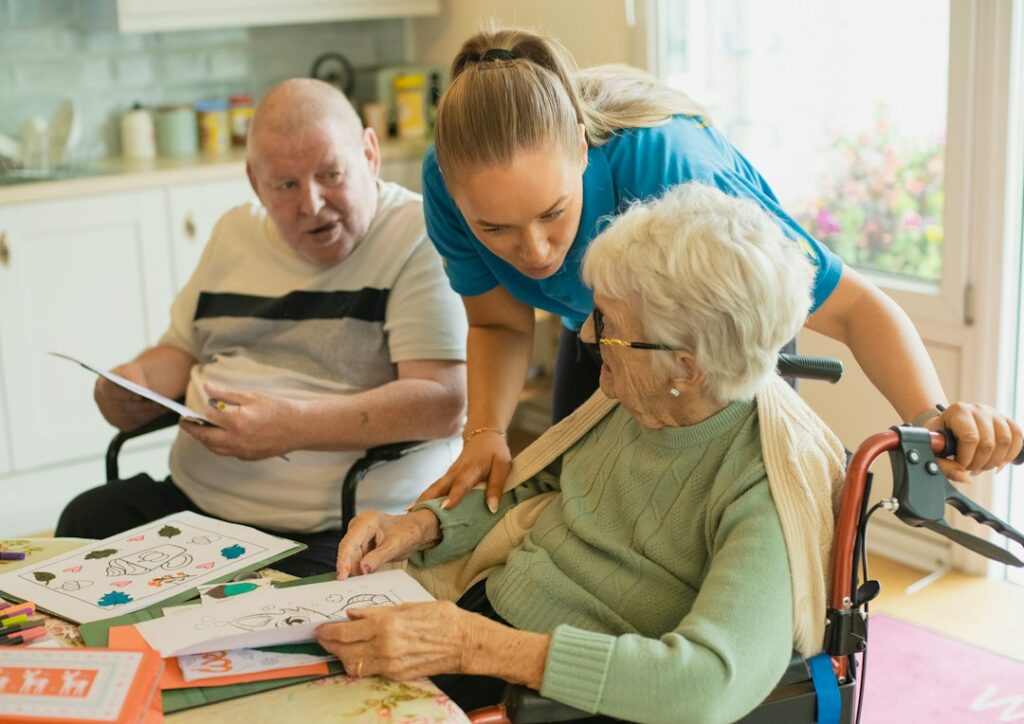
Choosing the right level of care starts with a practical question: What help is needed now, and what support may be needed soon? For residents of Throop, PA, the answer may involve assisted living, memory care, in-home support, skilled nursing, or a combination of services.
The best choice is not based only on age or a diagnosis. It should reflect a person’s daily abilities, health needs, safety risks, preferences, finances, and the amount of help available from family or friends.
What does “level of care” mean?
A level of care describes how much assistance a person needs with health management, personal routines, mobility, supervision, and everyday tasks. It is different from simply choosing a building or a room.
Two people of the same age may need very different arrangements. One may need help with meals and transportation but remain independent with bathing and medications. Another may need regular assistance with transfers, incontinence care, or memory-related supervision.
Care needs are often considered in areas such as:
- Bathing, dressing, grooming, and using the restroom
- Walking, transferring, and managing stairs
- Eating, preparing meals, and maintaining proper nutrition
- Taking medications correctly and on schedule
- Managing diabetes, heart disease, breathing problems, or other conditions
- Recognizing hazards, getting lost, or making unsafe decisions
- Keeping appointments, handling paperwork, and communicating needs
- Responding to emergencies or changes in health
A person may be independent in some areas and require substantial help in others. That mixed pattern is common.
When may independent living or in-home help be enough?
Independent living or limited in-home assistance may be appropriate when a person can remain safe with modest support. This may include help with housekeeping, laundry, transportation, grocery shopping, meal preparation, or occasional personal care.
This option may work when:
- The person can make decisions safely
- Medications are taken reliably, with reminders if needed
- The home can be maintained without dangerous clutter or hazards
- There have been no recent unexplained falls
- A trusted person can check in regularly
- Help is available if a problem develops
In-home support is not automatically safer simply because the person remains in a familiar home. A home with multiple stairs, poor lighting, icy walkways, or difficult bathroom access may create significant risks, especially during northeastern Pennsylvania winters.
A written plan helps clarify who will provide assistance, how often visits will occur, and what happens if the usual helper is unavailable.
When is assisted living a reasonable option?
Assisted living may fit someone who needs regular help with daily activities but does not require continuous skilled nursing care. The setting generally combines housing, meals, personal assistance, activities, and some degree of supervision.
Common reasons families begin considering assisted living include:
- Repeated falls or near-falls
- Missed medications or confusion about prescriptions
- Difficulty bathing, dressing, or using the restroom
- Unintentional weight loss or skipped meals
- Increasing isolation or inability to manage the household
- A family caregiver becoming exhausted or unable to provide enough support
- Frequent problems during evenings, overnight hours, or bad weather
Assisted living is not a single uniform category. The amount of support available can differ significantly between settings. Before making a decision, ask how assistance is provided, whether care plans can change, how emergencies are handled, and which services may involve additional charges.
The key question is whether the setting can safely meet the person’s current needs without requiring a level of medical care it is not designed to provide.
When might memory care be more appropriate?
Memory care may be considered when dementia or another cognitive condition creates risks that ordinary supervision cannot adequately address. The concern is not only memory loss. Judgment, orientation, communication, behavior, and the ability to recognize danger also matter.
Signs that more specialized support may be needed include:
- Wandering or becoming lost
- Leaving appliances or water running
- Repeatedly attempting unsafe tasks
- Forgetting meals, medications, or personal care
- Becoming distressed in unfamiliar situations
- Inability to respond appropriately to an emergency
- Significant nighttime confusion or disrupted sleep
A person with mild forgetfulness may not need a secured memory-care setting. Conversely, someone who appears physically capable may still require close supervision because of unsafe decision-making.
A thorough assessment should consider both current behavior and likely progression. Families should also ask whether staff receive dementia-specific training, how changes in behavior are handled, and how personal routines are preserved.
When is skilled nursing care necessary?
Skilled nursing is generally intended for people who need ongoing nursing oversight, complex medical treatment, rehabilitation, or assistance beyond what assisted living can safely provide.
Examples may include:
- Recovery after a serious illness, surgery, or hospitalization
- Complex wound care
- Feeding tubes or certain medical devices
- Frequent clinical monitoring
- Advanced neurological or respiratory conditions
- Major mobility limitations requiring extensive assistance
- Care needs that cannot be safely managed with routine personal support

A temporary need for skilled nursing does not always mean a permanent move is necessary. Some people receive rehabilitation and later return home or transition to a less intensive setting. The care plan should be reassessed as health and function change.
How can families assess needs fairly?
Start with observations rather than assumptions. For one or two weeks, record what help is needed and how often. Include tasks that the person may minimize or forget.
Useful questions include:
- What activities take much longer than they used to?
- What tasks are being avoided?
- Have there been falls, medication errors, or missed meals?
- Does the person recognize when help is needed?
- What happens during the evening or overnight?
- Can assistance be provided consistently by family?
- Is the current home practical during snow, ice, power outages, or other seasonal challenges?
A primary care clinician, nurse, occupational therapist, or social worker may help evaluate functional abilities when the situation is unclear. Professional assessment is especially important after a fall, hospitalization, sudden confusion, or rapid decline.
The person’s own preferences should remain part of the discussion. Safety matters, but so do privacy, routines, cultural values, pets, social connections, and the desire to remain involved in daily decisions.
What should be compared before choosing a setting?
Look beyond the appearance of a residence. The most useful comparison focuses on actual care practices.
Ask:
- What happens if care needs increase?
- How are medications stored, administered, and reviewed?
- How quickly can staff respond to a call for help?
- Is assistance available overnight?
- How are falls, infections, or sudden changes reported?
- What transportation or appointment support exists?
- Are meals adaptable for dietary or swallowing needs?
- How are bathing, laundry, and incontinence care handled?
- What happens during winter storms, power interruptions, or emergencies?
- Which services are included, and which may cost extra?
It is also wise to observe how staff speak with residents. Respectful communication, patience, privacy, and consistency often reveal more than a polished tour.
What are common mistakes in choosing care?
A frequent mistake is waiting for a crisis before discussing options. A fall, hospitalization, or caregiver emergency can force decisions under pressure.
Another mistake is choosing based only on physical appearance. A person may walk independently yet be unable to manage medications or recognize danger. The opposite can also occur: someone may need help with mobility but remain fully capable of making decisions and directing care.
Families sometimes assume that a move must be permanent. Care needs can change after rehabilitation, medication adjustments, treatment, or recovery from an acute illness. Plans should be reviewed periodically rather than treated as final.
The right level of care is the one that provides enough assistance for safety and dignity without unnecessarily taking away independence. For local households, planning early allows more time to compare options, involve the older adult in decisions, and prepare for the practical realities of daily life in every season.
